WELKER WP4N100A010D001A000 Pneumatic Shot Pin
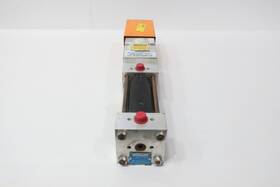
( Brand: Welker ), ( Manufacturer Part Number: WP4N100A010D001A000 ), ( Part Type: Pneumatic Pin ), ( Reference Sku: 1746654 ), ( Product Condition: Used Excellent )
Review WELKER Pneumatic Shot Pin
The **Welker WP4N100A010D001A000 Pneumatic Shot Pin** is a high-performance, precision-engineered component designed for automated assembly, stamping, and material handling applications where consistent, repeatable force and positioning are critical. Part of Welker s robust line of pneumatic actuators, this shot pin features a compact yet durable design optimized for integration into CNC machines, robotic systems, or custom workstations. Constructed from high-grade materials, including a reinforced aluminum or steel housing, it ensures longevity and resistance to wear, even in demanding environments where exposure to dust, moisture, or temperature fluctuations is common. The unit operates on compressed air, delivering a controlled, linear motion with minimal backlash, making it ideal for tasks such as pinning, indexing, clamping, or ejecting components with pinpoint accuracy. Its modular construction allows for easy customization, with interchangeable shot pins available in various diameters, lengths, and materials such as hardened steel, carbide, or ceramic to accommodate different workpiece specifications. The pneumatic system is equipped with a sealed, low-friction piston mechanism, ensuring smooth operation and reduced energy consumption, while the integrated air valve provides precise control over stroke length and speed, allowing operators to fine-tune performance for specific applications. Whether used in automotive manufacturing, electronics assembly, or aerospace production, this shot pin delivers reliable, high-speed performance with minimal maintenance requirements, making it a cost-effective solution for industries demanding efficiency and precision. Its compact footprint and versatile mounting options further enhance its adaptability, enabling seamless integration into existing or newly designed automation workflows.
### **Pros and Cons of buying a Welker WP4N100A010D001A000 Pneumatic Shot Pin**
#### **Pros:**1. **High Precision and Consistency** Pneumatic shot pins are designed for automated, repeatable positioning, making them ideal for high-volume production environments where accuracy is critical. This model appears to be engineered for tight tolerances, reducing human error in assembly or inspection processes.
2. **Efficiency and Speed** Unlike manual shot pins, pneumatic models operate quickly, allowing for faster cycle times in manufacturing lines. This can significantly increase productivity, especially in automated or semi-automated setups.
3. **Durability and Longevity** Pneumatic systems are generally robust and built to withstand continuous use. The Welker brand is known for industrial-grade components, suggesting this unit is designed for heavy-duty applications with minimal wear over time.
4. **Compatibility with Automation** This shot pin is likely compatible with CNC machines, robotic systems, or other automated processes, making it a versatile addition to modern manufacturing workflows. It can integrate seamlessly with existing pneumatic or electronic control systems.
5. **Reduced Operator Fatigue** Since the pin operates automatically, it eliminates the need for manual insertion or adjustment, reducing strain on workers and improving workplace safety.
6. **Adjustable and Customizable** Many pneumatic shot pins, including this model, offer adjustable stroke lengths, force settings, or positioning, allowing for flexibility in different applications. This adaptability can extend the pin s usefulness across various projects.
7. **Clean and Maintenance-Friendly** Pneumatic systems typically require less maintenance than hydraulic counterparts and produce minimal debris, contributing to a cleaner workspace. Regular maintenance (e.g., lubrication, air filter checks) is straightforward.
8. **Cost-Effective for Large-Scale Use** While the initial investment may be higher than manual alternatives, the long-term savings in time, labor, and reduced defects can justify the cost, especially in industrial settings.
---
#### **Cons:**1. **Higher Upfront Cost** Pneumatic shot pins are more expensive than manual or basic mechanical alternatives. The cost may be prohibitive for small businesses or one-off projects with limited budgets.
2. **Dependency on Air Supply** Pneumatic systems require a consistent and clean compressed air source. Fluctuations in air pressure or contamination (e.g., moisture, oil) can affect performance, potentially leading to downtime or maintenance issues.
3. **Complex Installation and Setup** Integrating a pneumatic shot pin into an existing system may require additional infrastructure, such as air lines, regulators, or control interfaces. This can complicate installation and may necessitate professional assistance, adding to costs.
4. **Potential for Air Leaks** Over time, pneumatic systems can develop leaks in hoses or seals, leading to inefficiencies or failures. Regular inspections and maintenance are required to prevent this.
5. **Limited Portability** Unlike manual shot pins, pneumatic models are typically fixed in place or require significant setup. They may not be practical for fieldwork or applications where mobility is a priority.
6. **Noise and Vibration** Pneumatic actuators can generate noise and vibration during operation, which may be an issue in quiet work environments or where ergonomics are a concern.
7. **Training Requirements** Operators or technicians may need training to properly use, maintain, or troubleshoot the pneumatic system, adding to the learning curve.
8. **Potential for Overuse or Misuse** If not properly calibrated or used beyond its specifications, the shot pin could cause damage to parts or tools, leading to costly repairs or replacements.
---
### **Conclusion:**The **Welker WP4N100A010D001A000 pneumatic shot pin** is a high-quality, precision tool well-suited for industrial manufacturing environments where automation, speed, and consistency are critical. Its advantages in efficiency, durability, and integration with automated systems make it a strong choice for large-scale production lines. However, the higher initial cost, dependency on air supply, and complexity of setup may pose challenges for smaller operations or projects with limited resources.
### **Recommendation:** - **Buy if:**- You operate in a high-volume manufacturing setting where precision and speed are non-negotiable.
- Your facility already has a reliable compressed air system and the infrastructure to support pneumatic tools.
- You prioritize long-term efficiency, reduced labor costs, and minimal human error.
- You are willing to invest in training and maintenance to ensure optimal performance.
- **Avoid if:**- Your budget is constrained, and the upfront cost is prohibitive compared to manual alternatives.
- Your workflow is small-scale, intermittent, or requires frequent relocations.
- You lack the technical expertise or resources to install, maintain, or troubleshoot pneumatic systems.
- Your environment lacks a clean, consistent air supply or has space limitations for air lines and controls.
For most **industrial or automated production environments**, the Welker WP4N100A010D001A000 is a worthwhile investment due to its reliability and performance. However, for **small businesses, hobbyists, or one-time projects**, a manual or lower-cost alternative may be more practical. Always evaluate your specific needs, budget, and existing infrastructure before making a purchase.
Details:
Pneumatic Filter-Regulators. Pneumatic Directional Valves. Pneumatic Exhaust Valves. Pneumatic Grippers.
Pneumatic Filters. Model Number:WP4N100A010D001A000. Pneumatic Cylinders.
part #: wp4n100a010d001a000 prices
- $111.00-$373.98
specifications hydraulicylind:
- brand: Welker
- mpn: Wp4n100a010d001a000
- part type: Pneumatic Pin
- reference sku: 1746654
- product condition: Used Excellent
shipping hydraulicylind:
- cost: $0.00
- type: Fixed
- transit: 6-6 Days
- class: Standard, Expedited, One-day
- service: Standard, Expedited, Overnight
offer hydraulicylind:
- quantity: 1
- sold: 0
- availability: In Stock
- started: February 25, 2026
- options: Ship-to-home
- best offers: True
seller hydraulicylind:
- rating: 100.0%
- city: Delta, Ohio
- # reviews: 124291
returns hydraulicylind:
- policy: Returns Accepted
- method: Money back
- time: 30 Days
- paid by: Seller
general hydraulicylind:
- condition: Used
- Business Industrial > Hydraulics, Pneumatics, Pumps Plumbing > Hydraulic Pneumatic Cylinders
payments hydraulicylind:
- credit card: Discover
- other
- wallet: Apple-pay
Welker WP4N100A010D001A000 Is Similar To:
- 22637 Welker Bearing Rigid Shot Pin Assembly (42.7% similar) And 3:00 PO. These are typically larger items...(May 3rd, 2018)
- S02032-050b04xlde1a000 Welker Shot Pin Stroke (46.7% similar) ...(June 25th, 2018)
- Ub2n075b010dl01a000 Welker Global Shot Pin Rigid Actuator Turck (44.4% similar) And 3:00 PO. Welker UB2N075B010DL01A000 75MM global shot pin rigid actuator 4 hole truck BIM-UNT-AP6X. 2m couplet - b rigid actuator single rod not ports ram 4 hole 8MM Del's and 11MM holes sensors truck electronic BIM-UNT-AP6X. These are typically larger items...(January 18th, 2019)
- Ub4n025a010dde1d000 Welker Shot Pin Aluminum Steel Ram Stroke (28.3% similar) ...(June 25th, 2018)
- Sb2n050b010d001a900 Welker Sbs Shot Pin W Peninsular Cylinder Spm00-0040 New (39.7% similar) This item is to be sent standard ground shipping for the us. I have a nice new Welker SB2N050B010D001A900 Sb's shot pin w peninsular cylinder SPM00 new for sale. Greenback stock AT1440...(January 3rd, 2016)
- Wp2n025b010d001a000 Welker Shot Pin W Cylinder New Free Shipping (47.7% similar) This item is to be sent standard ground shipping for the us. I have a nice new Welker WP2N025B010D001A000 shot pin w cylinder new for sale. Greenback stock AT1441...(January 3rd, 2016)
- Wp2n050b03ed001a030 Welker Shot Pin W Cylinder New Free Shipping (44% similar) Greenback stock AT1444. I have a nice new Welker WP2N050B03ED001A030 shot pin w cylinder new for sale. This item is to be sent standard ground shipping for the us...(January 2nd, 2016)
- Wp4n050b03ed001a030 Welker Shot Pin W Cylinder New Free Shipping (45.9% similar) This item is to be sent standard ground shipping for the us. I have a nice new Welker WP4N050B03ED001A030 shot pin w cylinder new for sale. Greenback stock AT1443...(November 3rd, 2015)
- Wspm-24-23-p2 Welker Shot Pin W Parker 2ma Cylinder New Free Shipping (26.3% similar) Greenback stock AT1442. I have a nice new Welker wpm p2 shot pin w Parker 2MA cylinder new for sale. The shipping on this item reflects standard ground shipping for the us...(January 3rd, 2016)
- Welker S02903-050b04wgde1a000 Gold Line Shot Pin New 317613 (55.2% similar) Stroke: 50MM. Welker S02903-050B04WGDE1A0 gold line shot pin. Welker S02903-050B04WGDE1A000. Manufacturer part number: S02903-050B04WGDE1A000...(December 15th, 2023)
- Welker Hp5-p100ve000 Hp5 Bull Pin 308515 (46.5% similar) Manufacturer part number: HP5-P100VE000. Port position: position : Welker HP5-P100VE000. HP5 bull pin...(August 3rd, 2024)