AVENTICS QF-8-C-10B1-T-TSP-24-60 Double Directional Control QF-8-C-10B1-T-TSP-24/60 Valve 3000
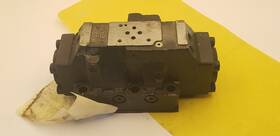
( Brand: Aventics ), ( Manufacturer Part Number: QF-8-C-10B1-T-TSP-24/60 ), ( Part Type: Control Valve ), ( Country Of Origin: United States )
Review AVENTICS Qf-8-c-10b1-t-tsp-24/60 Double Directional Control Valve 3000 Psi
The **Aventics QF-8-C-10B1-T-TSP-24/60** is a high-performance, double-directional control valve designed for precision pneumatic automation within industrial and manufacturing applications. Part of Aventics advanced QuickFlo series, this valve combines robust engineering with compact form factor to deliver reliable and efficient air control in demanding environments. Built with a **5/2-way spool design**, it ensures seamless switching between two active and one exhaust port, making it ideal for applications requiring bidirectional motion control, such as clamping, gripping, or positioning systems. The **QF-8-C** designation indicates a cartridge-style valve, allowing for easy integration into modular pneumatic circuits, while the **10B1** variant features a **10 mm nominal port size**, optimized for medium to high flow rates (up to **2400 L/min at 6 bar**) without compromising system efficiency. The **T-TSP** suffix denotes a **T-shaped spool with a TSP (Tapered Seat Pilot) mechanism**, which enhances sealing performance and reduces leakage, ensuring consistent operation even under fluctuating pressure conditions.
This valve is equipped with **direct mounting capability**, allowing for direct connection to Aventics **24/60 series** distribution blocks or manifold systems, simplifying installation and reducing wiring complexity. The **24/60 series** itself is engineered for high-pressure applications (rated up to **10 bar**), making the QF-8-C-10B1-T-TSP-24/60 suitable for environments where durability and reliability are critical. The valve s **pilot-operated design** ensures low power consumption while maintaining rapid response times, making it well-suited for high-cycle applications. Additionally, the **cartridge format** allows for quick replacement or swapping of components, minimizing downtime during maintenance. Constructed from **high-quality materials**, including corrosion-resistant polymers and precision-machined metal components, this valve is built to withstand harsh industrial conditions, including exposure to moisture, dust, and temperature variations within a broad operating range (typically **-10 C to 60 C**). Whether deployed in automated assembly lines, packaging machinery, or material handling systems, the QF-8-C-10B1-T-TSP-24/60 delivers consistent, repeatable performance, reinforcing Aventics reputation for innovation in pneumatic automation.
### **Pros and Cons of buying a Aventics QF-8-C-10B1-T-TSP 24/60 Double Directional Control Valve (3000 Series)**
#### **Pros:**1. **High Reliability and Durability** The Aventics 3000 series is known for robust construction, designed for heavy-duty industrial applications. It is built to withstand frequent cycling and harsh operating conditions, reducing the risk of premature failure.
2. **Compact and Space-Efficient Design** The QF series is designed to be compact, making it suitable for applications where space is limited. This can be particularly useful in automated systems or tight machinery layouts.
3. **High Flow Capacity** With a 10 mm port size, this valve can handle moderate to high flow rates, making it suitable for pneumatic systems requiring efficient air movement.
4. **Double Directional Control** The valve provides two independent directional control functions (e.g., extend/retract for a cylinder), allowing for precise control of pneumatic actuators without needing additional valves.
5. **Compatibility with Aventics Systems** As part of Aventics extensive product line, this valve integrates seamlessly with other components in their pneumatic system, including manifolds, regulators, and sensors, simplifying system design and maintenance.
6. **TSP (Tight Sealing Position) Technology** The TSP feature ensures minimal air leakage when the valve is in the closed position, improving energy efficiency and reducing operating costs.
7. **Easy Installation and Maintenance** The valve is designed for straightforward mounting and wiring, with clear labeling and modular connections. Aventics provides detailed documentation, and spare parts are readily available.
8. **Wide Operating Pressure Range** It can handle pressures up to 10 bar (145 psi), making it versatile for various industrial applications, including packaging, material handling, and automation.
9. **Electronic Control Options** The valve can be controlled via electrical signals (e.g., 24V DC), allowing for integration with PLCs, sensors, or other automated control systems.
10. **CE and Industry Certifications** Aventics products typically meet international safety and quality standards, ensuring compliance with regulatory requirements in many markets.
---
#### **Cons:**1. **Higher Upfront Cost** Compared to some generic or lower-end pneumatic valves, Aventics products are premium-priced. This may be a drawback for budget-conscious buyers or small-scale applications.
2. **Limited Port Size for High-Pressure/High-Flow Needs** While the 10 mm port is adequate for many applications, it may not be sufficient for very high-flow or high-pressure systems requiring larger valves (e.g., 16 mm or 20 mm ports).
3. **Specialized Knowledge Required** Aventics valves, while user-friendly, may require familiarity with pneumatic systems or assistance from a technician for optimal setup, wiring, or troubleshooting.
4. **Dependence on Aventics Ecosystem** If you are already using non-Aventics components (e.g., valves, cylinders, or manifolds from other brands), integration might require additional adapters or compatibility checks.
5. **Potential for Overkill in Simple Applications** For very basic or low-demand pneumatic systems, a simpler or cheaper valve might suffice, making this valve an unnecessary investment.
6. **Spare Parts Availability** While Aventics has a strong global presence, spare parts may not be as readily available in all regions or for older models compared to more widely used brands.
7. **Electrical Dependence** Since this is an electrically controlled valve, power supply issues or electrical failures could disrupt operation, requiring backup solutions (e.g., pilot-operated valves) in critical applications.
8. **Learning Curve for Advanced Features** Features like TSP or electronic control may require training to fully utilize, which could add time and cost for implementation.
---
### **Conclusion:**The **Aventics QF-8-C-10B1-T-TSP 24/60** is an excellent choice for **industrial pneumatic applications** where reliability, compact design, and precise control are prioritized. Its double directional control, tight sealing, and compatibility with Aventics ecosystem make it ideal for automated systems, material handling, or packaging machinery. However, its higher cost and specialized nature may not justify the investment for simple or low-demand applications.
If your project requires **high performance, long-term durability, and seamless integration with Aventics components**, this valve is a strong recommendation. For **budget-limited or non-critical applications**, a more affordable generic valve might be sufficient. Always evaluate your specific requirements flow rate, pressure, space constraints, and system integration before making a decision.
### **Recommendation:** - **Buy this valve if:**- You are working on an **industrial automation project** with Aventics components.
- You need **reliable, double-directional control** with minimal leakage.
- Your system requires **compact, high-quality pneumatic control** for moderate to high flow rates.
- You prioritize **long-term reliability and ease of maintenance**.
- **Consider alternatives if:**- Your budget is tight, and a lower-cost valve meets your needs.
- You require **larger port sizes** for higher flow rates.
- Your application is **non-critical**, and simplicity is more important than premium features.
- You are using **non-Aventics components**, and compatibility concerns arise.
For most **serious industrial pneumatic applications**, this valve is a **solid, well-supported choice** that balances performance with ease of use.
Details:
The item must be in the exact same condition as when first shipped and preferably packaging.
part #: qf8c10b1ttsp2460 prices
- $95.00-$425.00
specifications hydraulicylind:
- brand: Aventics
- mpn: Qf-8-c-10b1-t-tsp-24/60
- part type: Control Valve
- country of origin: United States
seller hydraulicylind:
- city: Frenchville, Maine
- rating: 100.0%
- # reviews: 13914
general hydraulicylind:
- condition: Used
- Business Industrial > Hydraulics, Pneumatics, Pumps Plumbing > Hydraulic Pneumatic Cylinders
shipping hydraulicylind:
- class: Standard, Expedited, One-day
- carrier: USPS, UPS
- service: USPS Ground Advantage, USPS Priority Mail, UPS Next Day Air, UPS 2nd Day Air
- transit: 5-8 Days
- type: Calculated
- cost: $0.00
payments hydraulicylind:
- credit card: Mastercard
- wallet: Paypal
- other
returns hydraulicylind:
- time: 30 Days
- paid by: Seller
- policy: Returns Accepted
- method: Money back
offer hydraulicylind:
- options: Ship-to-home
- quantity: 1
- sold: 0
- availability: In Stock
- best offers: True
- started: May 15, 2026
Aventics QF-8-C-10B1-T-TSP-24-60 Is Similar To:
- Aventics R480472526 R480472440 High Pressure Hydraulic Cylinder Me5-hh 3000 Psi 1.5 X 1 (40.5% similar) I do not know if it has been used or and how to test. Will pack with extreme care and ship fast...(April 20th, 2024)
- Smc Aventics Numatics Speedaire Parker Bimba Cdg5wbn40sv-0025-dkp10706 Cylinder Double-acting Single-rod 40mmbore 25mmstr (33.5% similar) Holden steel is a green outlet for manufacturers with surplus products. Shipping can be arranged through buyers shipping account FedEx, DHL, and ups. The serial numbers in the pictures are covered to prevent mischief by hackers or others that want cause harm. USA shipping. O the zip code you would ...(October 15th, 2024)
- Aventics 354ba43bmn56y61 Solenoid Pilot Valve And Base 322254 (34.8% similar) Aventics 354BA43BMN56Y61. Manufacturer part number: 354BA43BMN56Y61. Valve function: 4 way 2 position - return spring. Port size: 1/2...(April 21st, 2025)
- Rexroth 0822010841 Rexroth aventics Double Acting Pneumatic Cylinder Used (30.5% similar) These services include: ups 3 day select. The cost of combined shipping depends on weight, location buyer and size box. Prices for these options may differ from standard ground shipping. Item is sold as pictured. Ups 2 day air am. Ups next day am. Regrowth/aventics double acting pneumatic cylinder...(June 25th, 2025)
- Aventics R433040658 Pneumatic Cylinder 2 Inch Bore 3.75 Stroke 250 Psi C-mds4-pp-c (34.2% similar) Will come as shown and with what is pictured. May show minor imperfections but nothing that will impact performance. Pneumatic cylinder, for sale is a Aventics R433040658 cylinder 2 bore 3.75 stroke 250 psi C-MDS4-PP-C. Etch surplus Rochester, NY, shipping: charged according to location. Item ...(October 20th, 2025)
- Aventics R433091427 Pc Pressure Master Hydraulic Cylinder 3000 Psi 60 Lbs (40.3% similar) Aventics is a reputable brand known for producing reliable hydraulics and pneumatic. This cylinder is designed for industrial use, providing efficient and durable performance in various applications. The Aventics PC R433091427 pressure master hydraulic cylinder is a high-quality unit with maximum ...(November 25th, 2025)
- Aventics R503a2b60n83f1 Nos Series 503 Compact Pneumatic Valve Set Of 4 (35.4% similar) The 503 series valves are designed to complement benefits of Aventics g3 field bus electronics. 5 ported, 2 and 3 position, 4-WAY, spool sleeve rubber seal, CV: 1.2 - 1.4. The Aventics/pneumatic 503 series is a line of pneumatic directional control valves with ultra-high flow ratings per valve size...(February 14th, 2026)