PARKER PAC11642 Pneumatic Cylinder 3.000 250PSI
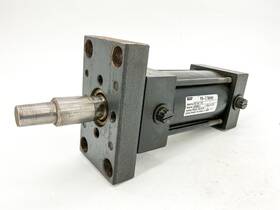
( Brand: Parker ), ( Manufacturer Part Number: PAC11642 ), ( Part Type: Pneumatic Cylinder )
Review PARKER 3.000 Pneumatic Cylinder 250psi Inch Stroke
The **Parker Hannifin PAC11642 3.000 Series Pneumatic Cylinder** is a high-performance, double-acting, rod-end pneumatic actuator engineered for demanding industrial applications requiring precision, durability, and reliability. Designed with Parker s signature engineering excellence, this cylinder operates at a maximum working pressure of **250 PSI**, delivering robust force output while maintaining exceptional efficiency and longevity. The **3.000 Series** is part of Parker s renowned **PAC (Precision Air Cylinder)** line, renowned for its tight tolerances, smooth operation, and minimal maintenance requirements, making it ideal for automation, material handling, packaging, and assembly systems where consistent performance is critical.
Constructed from high-grade **steel components**, including a **chrome-plated rod** and **hardened, ground cylinder bore**, the PAC11642 ensures resistance to wear, corrosion, and fatigue, even in harsh environments. The cylinder features a **sealed, double-acting design**, allowing for bidirectional force generation, which enhances versatility in applications requiring both extension and retraction cycles. Its **standard stroke length** (available in various configurations) is optimized for compact yet powerful operation, while the **quick-exhaust port** facilitates rapid response times, reducing cycle times in automated processes. The **rod-end mounting** provides flexibility in integration, accommodating flange, clevis, or trunnion attachments depending on the application s specific requirements.
For enhanced protection and longevity, the PAC11642 incorporates **Parker s proprietary sealing technology**, including **NBR (nitrile) or EPDM (ethylene-propylene-diene monomer) seals**, which resist oil, water, and abrasive contaminants while maintaining low friction and consistent performance over millions of cycles. The cylinder s **integrated cushioning system** further reduces noise and mechanical stress at the end of strokes, extending the life of both the cylinder and connected machinery. Additionally, the **standardized mounting dimensions** and **compatibility with Parker s extensive line of pneumatic controls and valves** make installation and integration seamless, reducing downtime and simplifying maintenance.
Built to meet **ISO 15552 and ISO 6432 standards**, the PAC11642 ensures compatibility with global pneumatic systems while adhering to strict quality and performance benchmarks. Whether deployed in **high-speed packaging lines, robotic assembly systems, or heavy-duty material handling equipment**, this cylinder delivers **reliable, repeatable motion** with minimal energy loss, contributing to overall system efficiency. Parker s reputation for innovation is evident in the PAC11642 s **modular design**, allowing for easy customization with optional accessories such as **position sensors, magnetic rod sensors, or extended rod lengths** to tailor performance to specific operational needs. With its **superior build quality, precision engineering, and field-proven durability**, the Parker PAC11642 stands as a cornerstone for industries demanding **high-performance pneumatic actuation**.
### **Parker PAC11642 3.000 Pneumatic Cylinder (250psi) Pros and Cons**
#### **Pros:**1. **High Reliability and Durability** Parker is a well-established brand in industrial automation, known for robust and long-lasting pneumatic components. The PAC11642 is designed for heavy-duty applications, ensuring consistent performance over extended use.
2. **Precision Engineering** The cylinder features a sealed rod design, minimizing contamination and wear, which improves accuracy and extends maintenance intervals. The 3.000-inch stroke length provides ample movement for many industrial tasks.
3. **Compatibility with Industrial Standards** The 250psi working pressure is standard for many manufacturing environments, making it easy to integrate with existing pneumatic systems. It is likely compatible with common control valves, regulators, and actuators.
4. **Versatile Mounting Options** The cylinder includes multiple mounting styles (e.g., clevis, trunnion, or flange), allowing flexibility in installation depending on the application s requirements.
5. **Energy Efficiency** Pneumatic systems are generally more energy-efficient than hydraulic ones for many applications, especially in intermittent or cyclic operations. The PAC11642 operates efficiently within its 250psi range.
6. **Quick-Connect Fittings** The cylinder likely includes quick-disconnect couplings, simplifying installation, maintenance, and replacement without losing compressed air.
7. **Wide Application Range** Suitable for packaging, material handling, clamping, pressing, and other industrial processes where controlled linear motion is required.
8. **Low Maintenance Requirements** With proper lubrication and sealing, the cylinder requires minimal upkeep, reducing downtime.
---
#### **Cons:**1. **Higher Upfront Cost** Compared to generic or lower-end pneumatic cylinders, Parker s branded components come at a premium price. This may be a significant investment for small businesses or startups.
2. **Dependence on Compressed Air Supply** The cylinder requires a reliable and properly maintained compressed air system. Poor air quality (moisture, contaminants) can degrade performance and shorten the cylinder s lifespan.
3. **Limited Customization** While the PAC11642 is well-suited for many applications, custom modifications (e.g., specialized rod coatings, unique mounting) may require additional costs or third-party solutions.
4. **Potential for Leaks** Over time, seals and fittings may wear out, leading to air leaks. Regular inspections are necessary to prevent efficiency losses.
5. **Noise and Vibration** Pneumatic cylinders can generate noise and vibration, which may require additional sound-dampening measures in sensitive environments.
6. **Skill Dependency** Proper installation, calibration, and maintenance require technical expertise. Improper handling can lead to premature failure or safety hazards.
7. **Weight and Space Considerations** The cylinder is relatively heavy (depending on material) and may require reinforced mounting surfaces, adding to installation complexity.
---
### **Conclusion**
The **Parker PAC11642 3.000 pneumatic cylinder (250psi)** is a high-quality, reliable choice for industrial applications requiring precise linear motion. Its durability, compatibility with standard systems, and low maintenance make it ideal for manufacturing, material handling, and automation tasks. However, the higher cost and dependency on a well-maintained compressed air system are key considerations.
For businesses with **budget constraints or simple applications**, a lower-cost generic cylinder might suffice. But for **high-demand, long-term, or mission-critical operations**, the Parker cylinder s reliability and performance justify the investment.
---
### **Recommendation**
**Buy the Parker PAC11642 if:**- You require a **long-term, high-performance** solution with minimal downtime.
- Your application demands **precision, durability, and compatibility** with existing pneumatic systems.
- You can justify the **higher upfront cost** with long-term savings from reduced maintenance and improved efficiency.
**Consider alternatives if:**- Your budget is tight, and a **lower-cost generic cylinder** meets your needs.
- Your application is **low-demand or intermittent**, where a less expensive option would suffice.
- You lack **proper compressed air filtration and maintenance infrastructure**, which could shorten the cylinder s lifespan.
**Final Verdict:** For most industrial users prioritizing **quality, reliability, and longevity**, the Parker PAC11642 is a strong recommendation. Ensure proper system integration and maintenance to maximize its performance.
Details:
Parker PAC11642 3.000 Pneumatic Cylinder 250PSI 3 Stroke.
part #: pac11642 price
- $174.95
specifications hydraulicylind:
- brand: Parker
- mpn: Pac11642
- part type: Pneumatic Cylinder
general hydraulicylind:
- condition: Used
- Business Industrial > Hydraulics, Pneumatics, Pumps Plumbing > Hydraulic Pneumatic Cylinders
offer hydraulicylind:
- best offers: True
- options: Ship-to-home
- sold: 0
- quantity: 1
- availability: In Stock
- started: March 4, 2026
seller hydraulicylind:
- rating: 100.0%
- # reviews: 12189
- city: Portland, Oregon
payments hydraulicylind:
- other
- wallet: Paypal
- credit card: Mastercard
returns hydraulicylind:
- time: 30 Days
- method: Money back
- paid by: Seller
- policy: Returns Accepted
shipping hydraulicylind:
- type: Calculated
- service: UPS Ground, UPS Next Day Air, UPS 2nd Day Air
- carrier: UPS
- transit: 2-6 Days
- class: Standard, One-day, Expedited
- cost: $0.00
Parker PAC11642 Is Similar To:
- .44bfnsrbv00.5 Parker Cylinder Bore Stroke (44.7% similar) Inventory 63039NEW old stock. 44BFNSRBV00. Parker cylinder. 5 bore 7/1 6IN stroke 1/2 in...(July 2nd, 2018)
- .56dxpsr10.0 Parker Stainless Steel Cylinder (34.3% similar) Parker stainless steel cylinder...(May 7th, 2018)
- .75nrpsr01.0 Parker Pnuematic Cylinder (48.5% similar) ...(May 26th, 2018)
- .75nsr01.5 Parker Cylinder Stainless Bore Stroke (45.9% similar) 5 stainless 3/4 bore stroke inventory 63010NEW old stock. Parker cylinder...(May 2nd, 2018)
- .75nsr02.0 75nsr02.0 Parker Cylinder Stainless 3-4 (34.2% similar) Stainless 3/4 bore 2 stroke inventory 63012NEW old stock. Parker cylinder...(November 3rd, 2017)
- .75psr02.0 75psr02.0 Parker Pneumatic Cylinder Stainless (49.6% similar) Please e-mail all questions or comments, to better understand what you are buying on. Actual shipping may vary. Unit - shelf tub 5DARRELL. For office use only...(January 8th, 2018)
- .75tfdsrb07.0 75tfdsrb07.0 Parker Used Cylinder Exlnt (35.1% similar) Please enter the shipping dimensions and weight listed above. Comes as pictured shipping info:flat rate: used,Parker cylinder. 0, used exiling. Used, Parker cylinder. Over 100,000,000 served. Check us out today...(December 1st, 2017)
- .75x2.00 Parker Series Air Cylinder Spring Return Shaft Bore (44.6% similar) It does mean that northern MRI may have not tested the items or assessed their performance operation, and therefore lacks any specific knowledge concerning condition of. The goal of northern MRI supply is to be a low cost provider for material that used or excess and quickly easily end user 3RD ...(May 19th, 2018)
- .88dxrsr01.0 88dxrsr01.0 Parker Pnuematic Cylinder (43.2% similar) ...(September 5th, 2017)
- 0.200-cj2maus34ac-14.000 Parker Air Piston Cylinder (33.9% similar) Air piston cylinder 250 psi. 200-CJ2MAUS34AC-14...(January 16th, 2019)
- 0.31bfdsr04.00-pack10 Parker Bore With Stroke Stainless Steel (29.5% similar) Thanks, Brianna. This item is in brand new condition original packaging...(November 5th, 2018)