SMC CBA2D40-50-DCJ1683J Hydraulic Pneumatic Cylinders
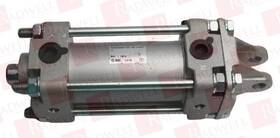
( Brand: Smc ), ( Manufacturer Part Number: CBA2D40-50-DCJ1683J ), ( Part Type: Hydraulic Pneumatic Cylinder )
Review SMC Cba2d4050dcj1683j Used
The **SMC CBA2D40-50-DCJ1683J** is a high-performance, compact pneumatic actuator designed for precision control in industrial automation applications, offering a robust solution for linear motion systems where reliability and efficiency are paramount. This double-acting, rod-end pneumatic cylinder operates on a 5/2-way valve system, delivering smooth and consistent linear motion with minimal friction, making it ideal for integration into assembly lines, packaging machinery, clamping systems, or any application requiring repeatable, high-speed positioning. Constructed from high-grade materials, including a durable aluminum alloy housing and a corrosion-resistant zinc-plated steel rod, this actuator is engineered to withstand demanding environments, including exposure to dust, moisture, and temperature fluctuations within its specified operating range of -10 C to 60 C. The **CBA2D40** series features a compact design with a bore size of 40mm, providing a balanced stroke length of 50mm, which ensures optimal force output of up to 2,000N while maintaining a compact footprint perfect for applications with limited space constraints. Its **DCJ1683J** designation indicates a specific mounting configuration and connection type, featuring a **D** (double-acting) operation, **C** (cylinder type), **B** (bore size), **A** (aluminum housing), **2D** (double rod end), **40** (bore diameter in millimeters), **50** (stroke length in millimeters), and **DCJ1683J** (a unique model variant with a **J**-series connection, likely incorporating quick-connect fittings or a specific port arrangement for seamless integration with SMC s valve systems). The cylinder is equipped with a **sealed piston rod** to prevent contamination and ensure longevity, while its **piston seal** and **end cap** are designed to minimize air leakage, enhancing energy efficiency and operational consistency. Whether deployed in food processing, automotive manufacturing, or material handling, this actuator delivers precise, repeatable motion with minimal maintenance requirements, making it a versatile and cost-effective choice for engineers and operators seeking a dependable pneumatic solution.
### **Pros and Cons of buying a SMC CBA2D40-50-DC-J1683J (CBA2D4050DCJ1683J) Pneumatic Actuator**
The **SMC CBA2D40-50-DC-J1683J** is a **rotary pneumatic actuator** commonly used in industrial automation, valve control, and machinery applications. Below is a detailed analysis of its advantages and disadvantages.
---
### **Pros**
1. **High Reliability and Durability**
- SMC is a well-established manufacturer known for robust pneumatic components. This actuator is designed for heavy-duty applications, offering long service life with proper maintenance.
- The **DC (double-acting) design** ensures consistent and precise positioning, reducing wear over time compared to single-acting alternatives.
2. **Precise and Repeatable Operation**
- The actuator provides **smooth, controlled rotation** (0 to 90 or 0 to 180 depending on mounting) with minimal backlash, making it ideal for applications requiring exact positioning (e.g., valve control, indexing systems).
- The **J-series (J1683J) variant** includes a **rotary encoder feedback option**, allowing for closed-loop control and real-time position monitoring, improving automation accuracy.
3. **Versatile Mounting and Integration Options**
- Compatible with **multiple mounting styles** (flange, shaft, or direct coupling), making it adaptable to various machinery setups.
- Works with **SMC s extensive pneumatic valve and cylinder range**, simplifying system integration.
- Supports **customizable stroke lengths** (e.g., 0 50 , 0 90 , or 0 180 ) based on application needs.
4. **Energy Efficiency**
- Pneumatic systems are generally more energy-efficient than hydraulic ones for many applications, especially in intermittent or cyclic operations.
- The **double-acting design** allows for bidirectional control without external springs, reducing energy waste.
5. **Low Maintenance Requirements**
- Pneumatic actuators have **fewer moving parts** compared to electric or hydraulic alternatives, reducing maintenance needs.
- SMC components are designed for **easy servicing**, with replaceable seals and minimal lubrication requirements.
6. **Safety and Environmental Resistance**
- Pneumatic systems are **inherently safe** in explosive or hazardous environments (when using appropriate air filters and lubricators).
- The actuator is **resistant to dust, moisture, and temperature fluctuations** (within specified operating ranges), making it suitable for industrial and outdoor applications.
7. **Cost-Effective for High-Volume Applications**
- While the initial cost may be higher than some electric actuators, the **low operational cost** (compressed air is often already available in industrial settings) makes it economical over time.
- Long lifespan and reliability reduce downtime and replacement costs.
8. **Compatibility with PLC and Automation Systems**
- The **J-series with encoder feedback** can be easily integrated into **PLC (Programmable Logic Controller) systems**, enabling automated control sequences.
- Supports **digital communication protocols** (e.g., SMC s proprietary or industry-standard signals) for advanced automation.
9. **Quick Response Time**
- Pneumatic actuators respond **instantaneously** to air pressure changes, making them ideal for applications requiring rapid movement (e.g., packaging machines, robotics).
10. **Global Availability and Support**
- SMC has a **strong global distribution network**, ensuring easy access to spare parts, technical support, and training.
- The brand is widely trusted in industries like **automotive, food & beverage, pharmaceuticals, and manufacturing**.
---
### **Cons**
1. **Dependence on Compressed Air Supply**
- Requires a **reliable and properly maintained compressed air system**, which adds infrastructure costs (compressors, dryers, filters, and piping).
- Air leaks or pressure drops can **disrupt operation**, requiring additional monitoring.
2. **Limited Continuous Torque at Low Speeds**
- Pneumatic actuators may experience **stiction or reduced torque** at very slow speeds due to internal friction, which can affect precision in some applications.
- Unlike electric servomotors, they do not maintain constant torque across all speeds.
3. **Noise and Vibration**
- Pneumatic systems can generate **higher noise levels** compared to electric actuators, which may be a concern in **cleanroom or noise-sensitive environments**.
- Rapid cycling can introduce **vibration**, potentially affecting adjacent machinery or sensitive equipment.
4. **Temperature Sensitivity**
- Extreme temperatures (below -10 C or above 60 C, depending on the model) can **reduce performance or damage seals**, requiring environmental controls.
- Cold weather may cause **airline freezing**, necessitating heated lines in harsh conditions.
5. **Lower Precision at Extremes of Stroke**
- While generally precise, **end-of-stroke accuracy** can degrade slightly due to mechanical play or air compression effects, though this is mitigated in the J-series with feedback.
6. **Higher Initial Cost for Advanced Features**
- The **encoder-equipped J-series (J1683J)** is more expensive than basic pneumatic actuators, increasing upfront costs for applications requiring feedback.
- Additional sensors or controllers may be needed for full automation integration.
7. **Maintenance of Air Quality**
- Contaminants in compressed air (oil, moisture, particles) can **damage seals and internal components**, requiring **air treatment systems** (filters, dryers, lubricators).
- Neglecting air quality maintenance can **shorten the actuator s lifespan**.
8. **Limited Customization for Unique Applications**
- While versatile, **non-standard mounting or stroke requirements** may necessitate custom modifications, increasing lead times and costs.
- Some specialized applications (e.g., high-speed indexing with extreme precision) may require supplementary components.
9. **Energy Consumption During Idle States**
- Unlike electric actuators that can hold position with minimal power, pneumatic actuators **require continuous air supply** to maintain position, leading to slight energy waste.
10. **Potential for Leaks and Air Loss**
- Over time, **seals and O-rings may wear**, leading to air leaks that reduce efficiency and require periodic checks.
---
### **Conclusion**
The **SMC CBA2D40-50-DC-J1683J** is a **high-quality, reliable pneumatic rotary actuator** well-suited for applications requiring **precise, repeatable motion in industrial environments**. Its **double-acting design, encoder feedback (in the J-series), and compatibility with automation systems** make it a strong choice for valve control, indexing, and machinery applications where pneumatic power is preferred.
However, its **dependence on compressed air, potential noise/vibration, and higher initial cost for advanced features** may pose challenges in certain scenarios. If your application **prioritizes speed, reliability, and integration with existing pneumatic systems**, this actuator is an excellent investment. Conversely, if **electric or hydraulic solutions are more cost-effective or environmentally suitable**, alternatives should be considered.
---
### **Recommendation**
**Buy the SMC CBA2D40-50-DC-J1683J if:**- You require **high-precision rotary motion** (e.g., valve actuation, robotic indexing).
- Your system **already uses SMC pneumatic components**, ensuring seamless integration.
- **Compressed air is readily available** and maintained properly.
- You need **closed-loop control** (via the J-series encoder) for automation.
- The application involves **high-cycle or heavy-duty operations** where reliability is critical.
**Consider alternatives if:**- Your environment has **strict noise or vibration constraints**.
- **Electric or hydraulic actuators** are more cost-effective for your specific application.
- **Extreme temperature or harsh conditions** make pneumatic systems impractical without significant additional infrastructure.
- You need **ultra-high precision at very slow speeds**, where electric servomotors may perform better.
**Final Verdict:**For most **industrial automation, valve control, or machinery applications where pneumatic power is advantageous**, the **SMC CBA2D40-50-DC-J1683J** is a **strong, well-supported choice**. Ensure your compressed air system is properly maintained to maximize its performance and lifespan. If budget or environmental factors are concerns, evaluate whether an electric or hydraulic alternative could better meet your needs.
Details:
All products are guaranteed to be working but may show signs of use if purchasing a used product. Sells new and surplus product develops channels to purchase such. Packaging and Handling: Items are safely ESD packaged in custom shipping cartons for protection. Call to use a shipping service other than the ones listed.
part #: cba2d4050dcj1683j prices
- $399.95-$1400.00
specifications hydraulicylind:
- brand: Smc
- mpn: Cba2d40-50-dcj1683j
- part type: Hydraulic Pneumatic Cylinder
offer hydraulicylind:
- availability: In Stock
- options: Ship-to-home
- quantity: 1
- started: April 7, 2026
- sold: 0
- best offers: True
returns hydraulicylind:
- time: 30 Days
- method: Money back
- paid by: Buyer
- policy: Returns Accepted
general hydraulicylind:
- Business Industrial > Hydraulics, Pneumatics, Pumps Plumbing > Hydraulic Pneumatic Cylinders
- condition: Used
shipping hydraulicylind:
- service: Standard
- cost: $12.90
- class: Standard
- type: Fixed
- transit: 30-35 Days
payments hydraulicylind:
- wallet: Google-pay
- credit card: Diners-club
- other
seller hydraulicylind:
- city: 1 Millennium Dr, Willingboro, NJ 08046
- # reviews: 1984 11
- rating: 99.6%
Smc CBA2D40-50-DCJ1683J Is Similar To:
- Cba1fn63-175-hl Smc Pneumatic Cylinder Used (30.8% similar) If another carrier such as ups or FedEx is required to ship due the size, then shipping costs may change...(April 19th, 2018)
- Cdpx2n15-125b Smc Guided Cylinder Used (32.6% similar) Items are usually shipped USPS or FedEx ground...(January 14th, 2019)
- Cdq2b100-50dm Smc Pneumatic Cylinder Bore Stroke Used (31.7% similar) Using the ask a question link at end of this item or by ING on our username surplus and there. The cost of combined shipping depends on weight, location buyer and size box. Prices for these options may differ from standard ground shipping. Condition: used Smc CDQ2B100-50DM pneumatic cylinder, 100MM ...(June 15th, 2018)
- Cdq2b100d-j7476-xc11 Smc Pneumatic Cylinder Used (29.2% similar) If another carrier such as ups or FedEx is required to ship due the size, then shipping costs may change...(March 5th, 2018)
- Cdq2b25-15dz Smc Compact Cylinder Used (34.9% similar) Sensors included. D-M9P Smc sensors make offer I4. These components worked when removed...(February 16th, 2019)
- Cdq2b50-100dm Smc Pneumatic Cylinder Bore Stroke With Magnet Used (24.8% similar) Smc CDQ2B50-100DM pneumatic cylinder, 50MM bore 100MM stroke with magnet. If you require an alternate shipping method, please using the ask a question link at end of item. Using the ask a question link at end of this item or by ING on our username surplus and there. Condition: used name plate wore ...(May 2nd, 2018)
- Cdq2b80-75dm Smc Pneumatic Cylinder Bore Stroke Used (28% similar) Prices for these options may differ from standard ground shipping. The cost of combined shipping depends on weight, location buyer and size box. Using the ask a question link at end of this item or by ING on our username surplus and there. If you require an alternate shipping method, please using ...(June 15th, 2018)
- Cdq2d25-40dm-f7pl Smc Pneumatic Cylinder Used (30.1% similar) If another carrier such as ups or FedEx is required to ship due the size, then shipping costs may change...(May 20th, 2018)
- Cdq2kwb25-20d Smc Cylinder Used (27.8% similar) Used, but in good working condition. For expedited shipping options. Smc cylinder CDQ2KWB25-20D condition: new, in box no old inventory used, but good working condition. Some exceptions may apply...(October 9th, 2018)
- Cdq2l16-10d Smc Compact Cylinder Used (35.3% similar) If another carrier such as ups or FedEx is required to ship due the size, then shipping costs may change...(January 23rd, 2018)
- Cg1gn40-500 Smc Used Cg1ba40-500-bb6 (31% similar) Looks new with minor defects. Barely used...(July 19th, 2017)