PARKER 01.50 Pneumatic Cylinder H2AUV14A 1.500 250PSI
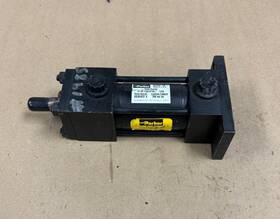
( Brand: Parker ), ( Manufacturer Part Number: 01.50 ), ( Part Type: Pneumatic Cylinder ), ( Suitable Media: Compressed Air ), ( Maximum Pressure: 250 Psi )
Review PARKER Series 2a Pneumatic Cylinder 250psi
The **Parker Hannifin 01.50 H2AUV14A 1.500 2A pneumatic cylinder** is a high-performance, double-acting, rod-extending pneumatic actuator designed for demanding industrial applications where precision, reliability, and durability are paramount. Engineered with Parker s signature engineering excellence, this cylinder operates at a maximum working pressure of **250 psi (17.2 bar)**, delivering robust force output for a wide range of automation, material handling, and manufacturing processes. The **1.500 mm (1500 mm) stroke length** provides ample travel for heavy-duty tasks, such as clamping, positioning, or pushing operations, while the **2A mounting configuration** ensures versatile integration into existing machinery, allowing for flexible installation in either horizontal or vertical orientations. Constructed from high-grade materials, including a **chrome-plated or anodized rod** for corrosion resistance and extended wear life, this cylinder is built to withstand harsh environments, including exposure to moisture, dust, and temperature fluctuations. Its **H2AUV14A designation** indicates a **sealed, rod-extending design with a cushioned stroke**, minimizing impact forces at the end of travel for smoother operation and reduced wear on connected components. The cylinder features Parker s **standardized quick-connect fittings**, ensuring easy and secure attachment of high-quality hoses and tubing, while its **integrated magnetic position feedback option** (available as an accessory) enhances system control by providing real-time position verification. Whether deployed in automotive assembly lines, packaging machinery, or heavy-duty fabrication equipment, this cylinder offers a perfect balance of efficiency, precision, and longevity, making it an indispensable component for industries requiring dependable pneumatic actuation.
### **Parker 01.50 H2AU V14A Pneumatic Cylinder (1.500 mm Stroke, 250psi) Pros and Cons**
#### **Pros:**1. **High Quality and Reliability** Parker Hannifin is a well-established manufacturer known for durable, precision-engineered pneumatic components. Their cylinders are designed for long-term performance in industrial applications.
2. **Standardized Compliance** The model adheres to industry standards (likely ISO, CE, or UL certifications), ensuring compatibility with most automation systems and reducing integration risks.
3. **Wide Availability of Parts** As a global brand, replacement seals, rods, and fittings are readily accessible, minimizing downtime in case of wear or failure.
4. **Adjustable Stroke (1.500 mm)** The 1.5-meter stroke provides flexibility for applications requiring extended linear motion, such as packaging, material handling, or assembly lines.
5. **High Pressure Rating (250psi)** Suitable for demanding applications where force is critical, such as clamping, pressing, or heavy-duty positioning tasks.
6. **Versatile Mounting Options** The design likely supports multiple flange or trunnion mounts, allowing for easy integration into existing machinery.
7. **Energy Efficiency** Pneumatic systems are generally more energy-efficient than hydraulic alternatives for intermittent or moderate-force applications.
8. **Low Maintenance** Compared to hydraulic cylinders, pneumatic units have fewer seals and moving parts, reducing maintenance frequency.
9. **Quick-Exhaust Capability** The design may include features like quick-exhaust ports, improving cycle times in automated processes.
10. **Compatibility with Standard Air Systems** Works seamlessly with compressed air networks (typically 80 100psi), requiring minimal additional infrastructure.
---
#### **Cons:**1. **Higher Upfront Cost** Parker cylinders are premium-priced compared to generic or aftermarket alternatives, which may not be cost-effective for low-budget projects.
2. **Sensitivity to Contaminants** Pneumatic systems are vulnerable to moisture, oil, and particulate buildup in the air supply. Poor filtration can lead to premature wear on seals and internal components.
3. **Limited Force Control** Unlike hydraulic cylinders, pneumatic units lack fine force regulation without additional proportional valves, which may be a drawback for precision applications.
4. **Noise and Vibration** Rapid actuation can generate noise and mechanical stress, requiring sound dampening or vibration isolation in sensitive environments.
5. **Temperature Sensitivity** Extreme temperatures (high or low) can affect air viscosity and cylinder performance, potentially requiring additional heating/cooling systems.
6. **Dependence on Compressed Air Supply** Downtime in the air compressor or pressure drops can halt operations, unlike electric or hydraulic systems that may have backup power options.
7. **Rod Wear Over Time** The rod may experience wear or corrosion if exposed to harsh environments (e.g., moisture, chemicals), necessitating regular inspections.
8. **Less Suitable for High-Speed Continuous Operation** While capable of fast cycles, prolonged high-speed use can lead to heat buildup and reduced lifespan if not properly cooled.
9. **Customization Limitations** Standard models may not accommodate non-standard mounting or integration requirements, requiring additional engineering work.
10. **Environmental Considerations** Compressed air systems consume energy, and leaks can contribute to wasted air, increasing operational costs over time.
---
### **Conclusion**
The **Parker 01.50 H2AU V14A pneumatic cylinder** is an excellent choice for applications requiring **reliability, precision, and durability** in moderate to high-force pneumatic systems. Its **standardized design, high pressure rating, and long stroke** make it ideal for industrial automation, material handling, and assembly tasks where consistency and performance are critical.
However, the **higher cost, maintenance sensitivity, and dependency on clean air supply** may pose challenges for cost-sensitive or high-vibration environments. If **energy efficiency, quick response, and low maintenance** are priorities, this cylinder is a strong contender. For applications needing **ultra-precision force control or continuous high-speed operation**, supplementary components (e.g., proportional valves, dampeners) may be necessary.
### **Recommendation**
- **Buy if:**- You require a **high-quality, long-lasting cylinder** for industrial automation.
- Your application demands **1.5m stroke and 250psi pressure** with minimal downtime.
- You have access to **proper air filtration and maintenance** to ensure longevity.
- Budget constraints allow for a **premium brand** with extensive support.
- **Consider Alternatives if:**- You need **ultra-low-cost** solutions (e.g., generic cylinders from local suppliers).
- Your environment has **extreme contaminants** (requiring additional filtration or sealing).
- Force control is critical (consider adding a **proportional valve**).
- Energy efficiency is a major concern (evaluate **electric or hybrid actuators**).
**Final Verdict:** For most **mid-to-large-scale industrial applications** where reliability and performance are paramount, the Parker cylinder is a **strong, well-supported investment**. However, conduct a **cost-benefit analysis** against alternatives to ensure it aligns with your specific operational needs.
Details:
PARKER 01.50 H2AUV14A 1.500 SERIES 2A PNEUMATIC CYLINDER 250PSI.
part #: 0150 prices
- $49.99-$174.99
specifications hydraulicylind:
- brand: Parker
- mpn: 01.50
- part type: Pneumatic Cylinder
- suitable media: Compressed Air
- maximum pressure: 250 Psi
payments hydraulicylind:
- wallet: Paypal
- credit card: Visa
- other
offer hydraulicylind:
- availability: In Stock
- options: Ship-to-home
- quantity: 1
- started: March 2, 2026
- best offers: True
- sold: 0
shipping hydraulicylind:
- transit: 4-10 Days
- class: Standard
- carrier: USPS
- service: USPS Ground Advantage
- cost: $19.50
- type: Calculated
returns hydraulicylind:
- paid by: Buyer
- method: Money back
- policy: Returns Accepted
- time: 30 Days
general hydraulicylind:
- Business Industrial > Hydraulics, Pneumatics, Pumps Plumbing > Hydraulic Pneumatic Cylinders
- condition: Used
seller hydraulicylind:
- rating: 99.7%
- city: Troy, Ohio
- # reviews: 2844
Parker 01.50 Is Similar To:
- .44bfnsrbv00.5 Parker Cylinder Bore Stroke (30.5% similar) Inventory 63039NEW old stock. 44BFNSRBV00. Parker cylinder. 5 bore 7/1 6IN stroke 1/2 in...(July 2nd, 2018)
- .56dxpsr10.0 Parker Stainless Steel Cylinder (41.1% similar) Parker stainless steel cylinder...(May 7th, 2018)
- .75bfdsrmx6.0 75bfdsrmx6.0 Parker Sr Series Round (32.1% similar) ...(October 5th, 2017)
- .75nrpsr01.0 Parker Pnuematic Cylinder (47.5% similar) ...(May 26th, 2018)
- .75nsr01.5 Parker Cylinder Stainless Bore Stroke (30.6% similar) 5 stainless 3/4 bore stroke inventory 63010NEW old stock. Parker cylinder...(May 2nd, 2018)
- .75nsr02.0 75nsr02.0 Parker Cylinder Stainless 3-4 (30.1% similar) Stainless 3/4 bore 2 stroke inventory 63012NEW old stock. Parker cylinder...(November 3rd, 2017)
- .75psr02.0 75psr02.0 Parker Pneumatic Cylinder Stainless (45.4% similar) Please e-mail all questions or comments, to better understand what you are buying on. Actual shipping may vary. Unit - shelf tub 5DARRELL. For office use only...(January 8th, 2018)
- .75tfdsrb07.0 75tfdsrb07.0 Parker Used Cylinder Exlnt (32.8% similar) Please enter the shipping dimensions and weight listed above. Comes as pictured shipping info:flat rate: used,Parker cylinder. 0, used exiling. Used, Parker cylinder. Over 100,000,000 served. Check us out today...(December 1st, 2017)
- .75x2.00 Parker Series Air Cylinder Spring Return Shaft Bore (43.9% similar) It does mean that northern MRI may have not tested the items or assessed their performance operation, and therefore lacks any specific knowledge concerning condition of. The goal of northern MRI supply is to be a low cost provider for material that used or excess and quickly easily end user 3RD ...(May 19th, 2018)
- .88dxrsr01.0 88dxrsr01.0 Parker Pnuematic Cylinder (42.5% similar) ...(September 5th, 2017)
- 0.200-cj2maus34ac-14.000 Parker Air Piston Cylinder (35.1% similar) Air piston cylinder 250 psi. 200-CJ2MAUS34AC-14...(January 16th, 2019)